Location(s): Fiji
Dates travelled: 29th June –29th July 2023
Being bored in a lecture in the spring of 2023 changed my life. Sat amongst the disinterested masses, I whipped out my phone and opened the course group chat to give my brain some stimulation. A message from one of the boys mentioned a presentation later that day.
E: Anyone going to this?
S: I’m going later
L: It’s in room 4001
E: Something about the Pacific Islands
“Yeah, I’ll be there,” I wrote.
Don’t follow the crowd, some say. On this occasion, I did, and boy am I grateful for it.
A gentlemen by the name of Nigel introduced us to his company, Think Pacific, a social enterprise that ran immersive volunteer projects in Fiji. In short, the programmes involved living with a Fijian family in a village and participating in fulfilling work whilst experiencing the Island lifestyle. I reckon everybody watching the presentation was up for it until the heard the following:
If your university doesn’t sponsor you, you’ll have to pay for the whole thing yourself, flights as well.
Oof. That was a kick in the teeth for many. Even for the lads that had money saved up, it would mean no more Hallamnation on Wednesday nights and no Leeds, Reading or Creamfields over the summer. Fortunately, such vices have never really tickled my fancy, and I was game for Fiji. Frankly, it could have sapped everything from my bank account, and I still would have done it without ever looking back.
My application was sent off the same week. Think Pacific offered a multitude of programs all over Fiji (and now in Bali and Thailand, too), but it was the Community Build – a four-week construction programme to build a medical dispensary – that caught my eye. Given my credentials (experience in the industry, plus I was studying project management at the time), I fancied myself a valuable asset.
Also, I desperately wanted to build something meaningful. The last construction project I’d worked on had been a warehouse for Amazon. It was a fantastic challenge that pushed my limits, and the Construction Manager was a real role model for me. However. I had absolutely no desire to make Jeff Bezos any more money. Jeff was doing just fine without me, whereas, in Fiji, people battled every day for basic necessities. I felt I could make a real difference to them. Another motivator was one that stemmed all the way back to childhood. Whether it was because I didn’t excel in socialising at school, or that I never loved my hometown of Leicester, I had wanted for years to have a community outside of the UK. I suppose I wanted to know I could go to the other side of the world and be welcomed with open arms. To connect with people in a world outside the one I knew, despite differences in colour and culture.
So, I applied and got the nod. After handing in my last Uni assignment, I cracked down on the extensive kit list. I about ransacked Boots and SuperDrug trying to box off pharmaceuticals alone: water-purification, antisceptics, anti-shit-yourself pills, etc.
My flight ticket read ‘one-way.’ No, I do not currently reside in Fiji. Since I was going to the other side of the world, my parents advised me to see Australia before coming home. After Fiji I would take another flight to Sydney, but that’s a story for another day.
I flew first to San Fransisco. A ninety-minute layover leaves one tight for time when dealing with US customs. Once the Americans conceded I was not a terrorist, I dashed off for the next plane. The second aircraft was noticeably snugger than the Virgin plane I took to the states. I’d bagged an aisle seat, but foolishly agreed to swap with my elderly neighbour so he could stretch his knackered old legs. I ended up with his wife as my neighbour on my left side, and nobody sat on my right. Then came along one of the biggest, widest men I’ve ever laid eyes on. Some massive Tongan juggernaut who could have easily been a prop for a rugby team. Of course he took the seat next to me, and half of mine too. Moral of the story: Don’t give up an aisle seat for anyone. The old bastard who took mine only got up once for a slash.
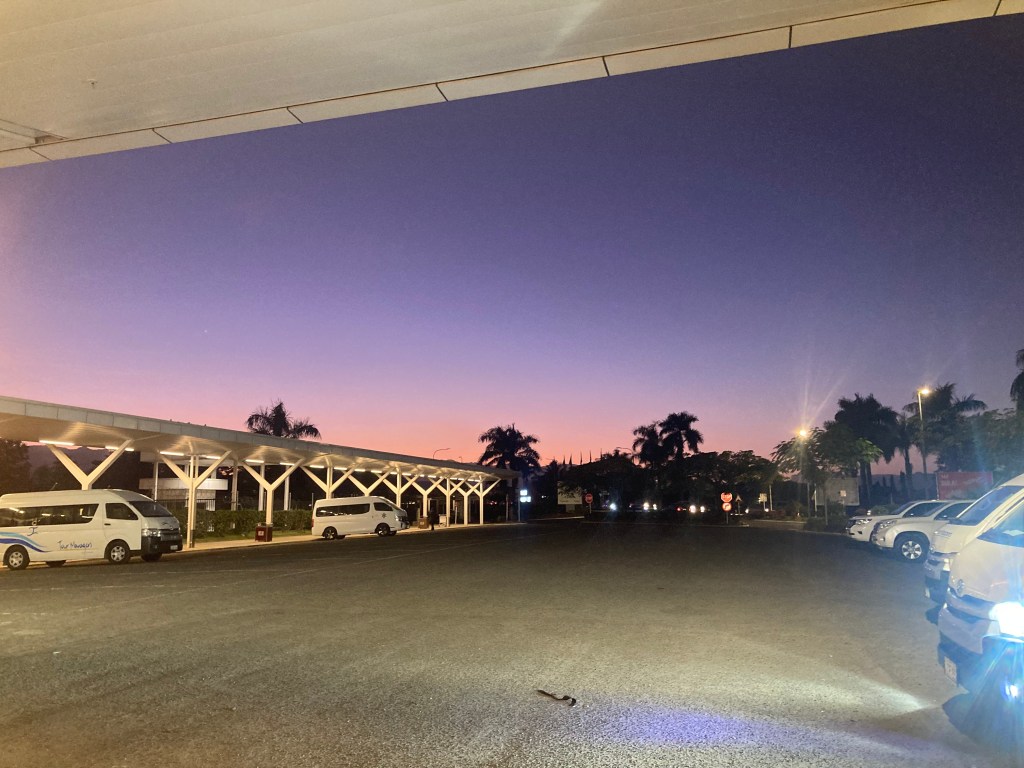
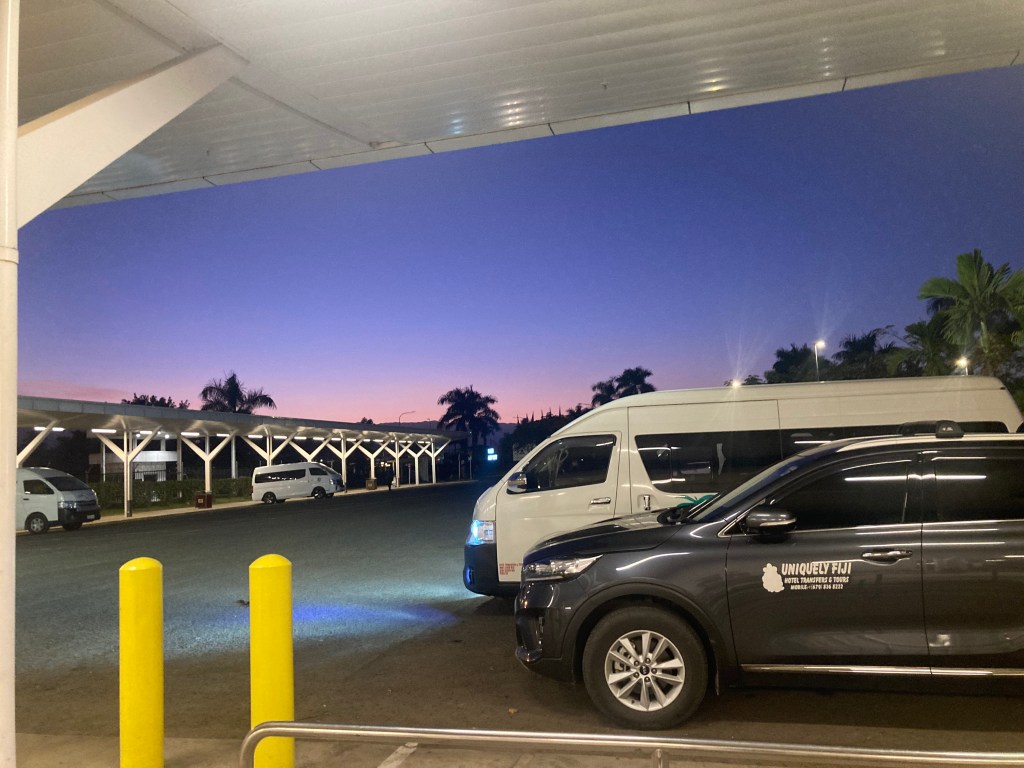
I landed in Nadi (pronounced ‘nan-dee’) at about six in the morning. Now, as I mentioned, airport security in the US is rather straight face no banter. In Nadi, on the other hand, we were greeted at customs by a three-man ukelele band singing heart-warming songs in Bula shirts and sulus. The first of many Fijians I met who simply loved to sing. Running on no sleep for thirty hours and trying to (literally) decompress after being squashed by a whopping great Tongan, I needed this kind of reception to mellow out my mind.
I waited outside the airport with a Chilean tourist for my taxi. An hour went by, but Think Pacific had warned about this. The taxis were on ‘Fiji Time’.
Fiji Time refers to the laid-back mentality Fijians take on a daily-basis. If a Fijian says they are going to arrive at seven, expect them no sooner than eight-thirty.
When transport arrived, I and the Chilean woman were joined by two lads also undertaking Think Pacific projects. The Chilean got off at a nearby stop, but the rest of us went to Smuggler’s Cove. Our rooms were not yet ready, so we ditched our bags and went out to the restaurant overlooking the beach. Different from a European beach; brown sand, with no sun loungers or umbrellas. In fact, it was deserted that morning, but what a nice spot it made to grab breaky.
Whilst eating, we were joined by yet another pair of soon-to-be volunteers. One was on the Community Build with me, and would become a good friend of mine in the weeks to come. Unsure of what to do with ourselves, we took a peek at the activity board filled with pamphlets in reception. In the end, we decided on zip-lining.
A van came to pick us up and took us on a beautiful countryside drive. July falls within Fiji’s winter and dry season. Temperatures are akin to that of a hot English summer, particularly in Nadi, which doesn’t tend to be plagued by heavy downpours as much as other parts of the country.
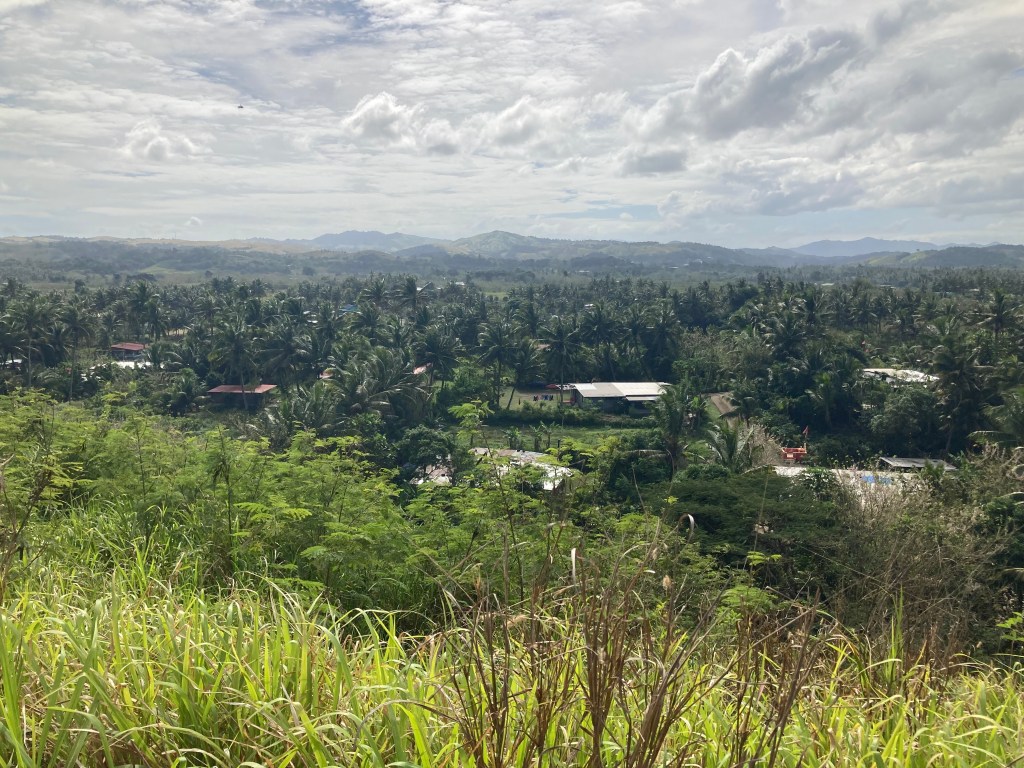
Around an hour’s drive to Jurassic Park Fiji and seldom was luscious greenery ever out of sight. In the infrequent gaps between in the tall trees thick with leaves, were endless fields of gold and green, and sweet smiles from the local people who waved when we drove past.
Sun cream and insect repellent were lathered on as soon as we jumped out the van. We signed the terms and conditions, pre-ordered our lunchtime pizzas, and then we were away.
If I hadn’t already had enough chances to revel in the breathtaking landscapes, I would get another as I summitted the stairs in my harness and helmet. The instructors demonstrated where to hold the line, foot placement, and how to brake. A couple of the amigos went first, then I was clipped on.
I remember a few nerves as I overlooked the drop. Those nerves dissipated once I pushed off, and I spent the next hour gliding around with little on my mind except freedom.
After the zipline course, a guide took us on a tour through the forest. Ingrained in my memory is Cannibal Rock, a tremendous oval stone, two storeys tall, and said to have been a dining place for cannibals in centuries passed. Spooky…
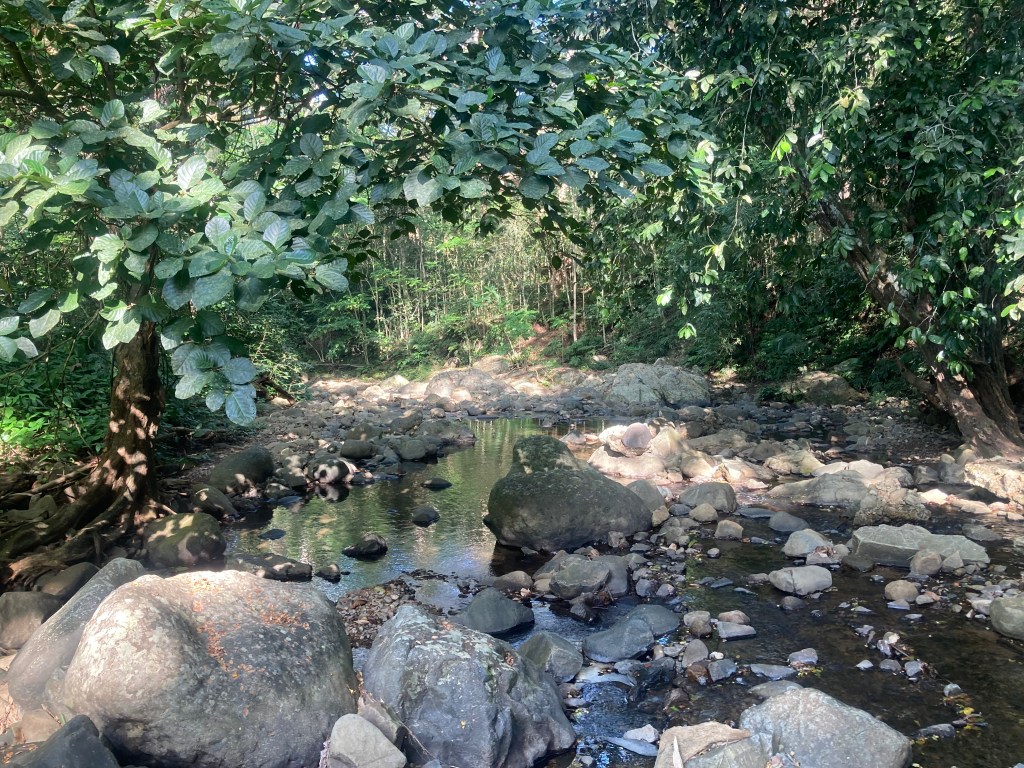
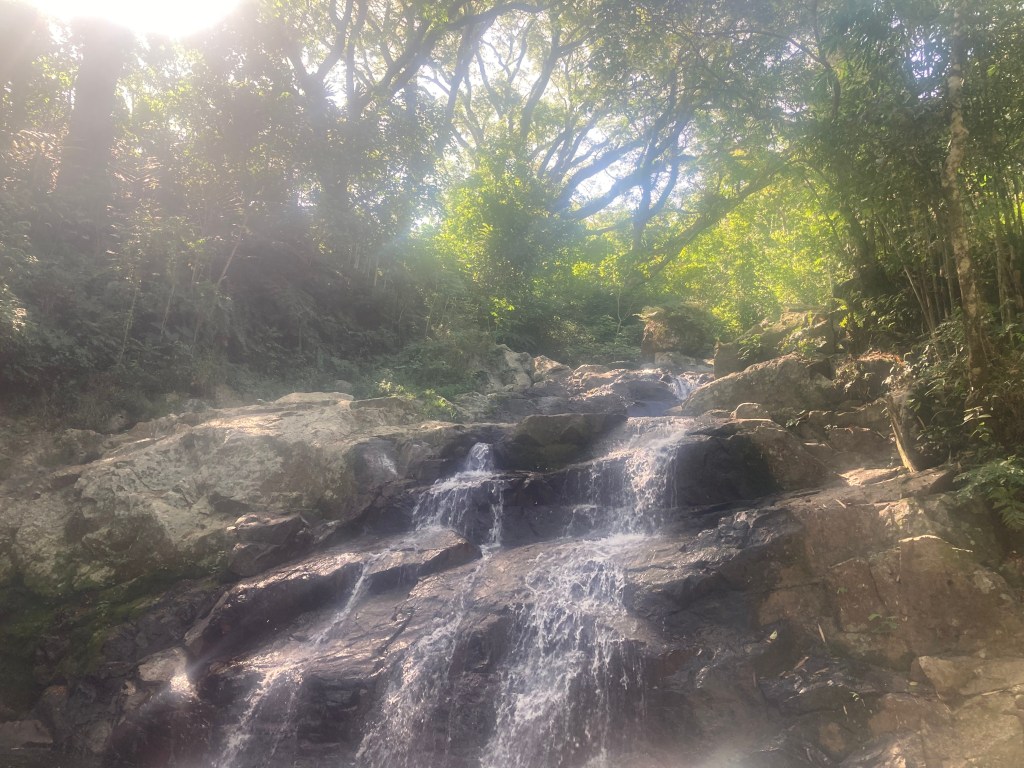
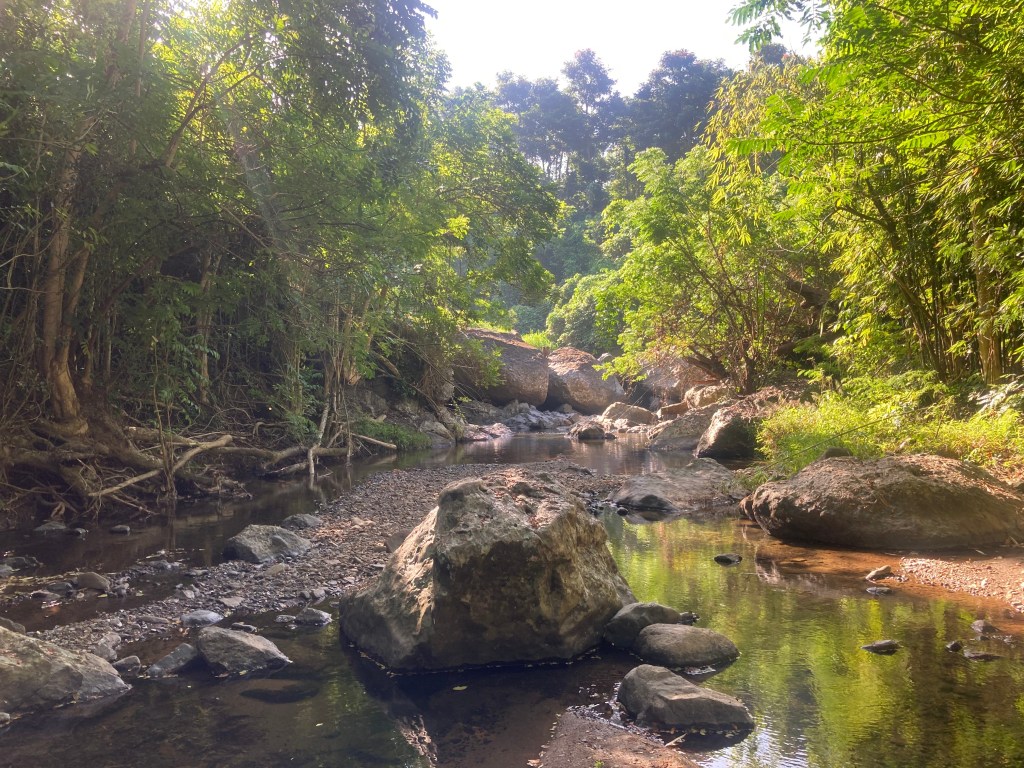
At a small waterfall, we climbed the surrounding rocks and paddled in the pool at the bottom. Lunch was ready upon our return. The pizzas were out of this world. As per usual, I was the biggest eater in the group, so I ended up polishing off everybody else’s once I’d scoffed mine.
There was time for one more run on the lines. Now we knew the ropes, the instructors let us hang upside down from the ziplines by swinging our bodyweight back and gripping the harness with the soles of our shoes. Then an instructor would give us a push off down the line, calling out “ooh-wooh!” when it was time to flip upright again.I tried zipping no-handed on the last-but-one line and got stuck halfway with everyone watching. Horrendous depletion of aura.
Jet lag caught up with me on the drive home. I blinked once and we were suddenly back at Smugglers Cove. After settling into my room, and a few sets of calisthenics to get the blood flowing, I poked my head in the bar, where volunteers for the upcoming sports coaching programme were meeting for drinks. I was shattered and fancied my own space, so didn’t hang around long. It felt like a failure on my part, not living up to my promise to be more outgoing on my travels, but I told myself I could always try again tomorrow.
The ‘tomorrow’ in question commenced with my first ever solo-travel excursion: a day trip to Tivua island.
A bus took me to the port where I bought my ticket. I then had another twenty minutes to behold the glorious South Pacific Ocean before we were called to board.
Like with the airport, a crewmember greeted us on the pier, singing whilst he played ukelele. We were each given a cup of delicious juice and guided to a seat. A young woman named Sheri introduced herself as our guide and told us how the day would unfold.
I was parked to the rear of the boat next to an Australian man and his wife and father-in-law, who were Kiwis. We chinwagged as the crew boosted the vibes with island songs and cans of Fiji gold, on the house. I wasn’t interested in booze but couldn’t keep my fingers off the home-baked lamingtons they served.
A mass of trees came into being in the distance. Then a long strip of beach, and an even longer wooden pier stretching out to the water. We anchored beside it and disembarked. Crystal-clear water surrounded the island. Beach huts stood past the palm trees, and upon the hot sands were deckchairs and sunbeds with little thatched roofs, providing maximum lounging potential.
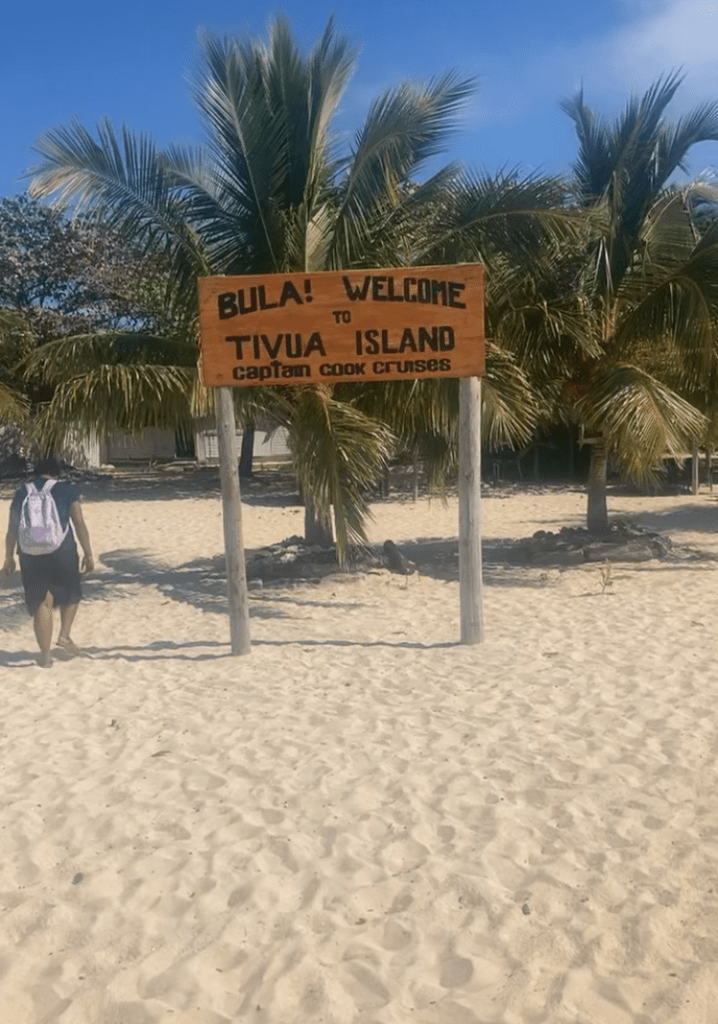
One crewmember manned a stall lending snorkels, flippers and balls for beach sports. Kayaking and scuba diving equipment were other options, and I’ve heard riveting reviews about diving in Fiji, but didn’t put them to the test on that day. I did a lap of the island on foot, listening to music, then took a snorkel mask and a pair of flippers to the water.
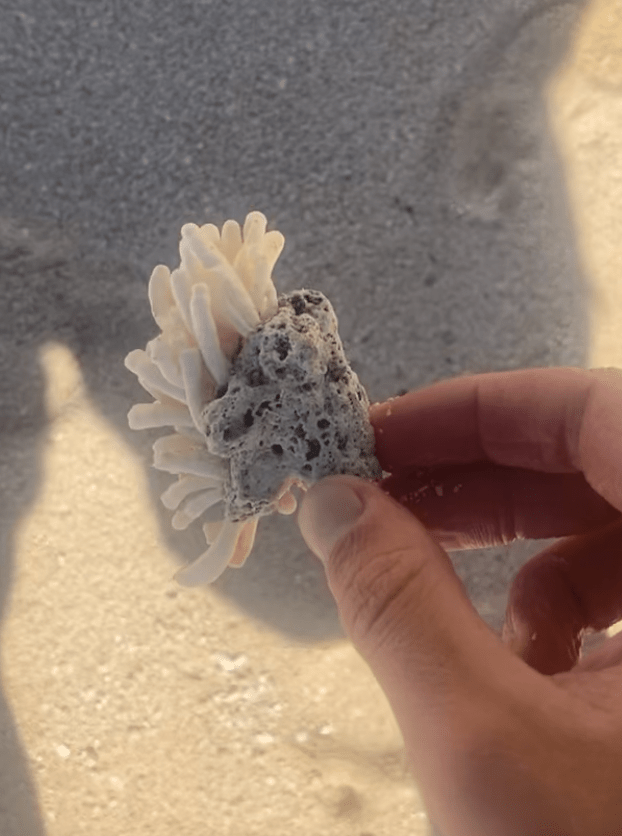
The mask was practically redundant; to this day I haven’t come across clearer (nor warmer) natural water. Schools of colourful fish swam around me, and the rocks were decorated with neon-blue starfish, aka the blue Linckia. Not to knock them but I can’t imagine they give many predators the slip.
Going deeper, I found some wreckage and a massive diving cage on the seabed, though it put images of shark movies in my head, so retreat to the shallows I did.
The only danger I found on the island was a sea snake powering its way across the sand. These have a venomous bite that can send a human to the long sleep, and they are identifiable from their black and white-striped skin. Fortunately, they prefer to retain their peace over their reputation, so will not deploy the deadly fang unless they feel it’s absolutely necessary. No casualties that day on Tivua.
A buffet was served for lunch, consisting mostly of generic cuisine, i.e. chicken wings, bread, potato salad, etc. I accompanied my scran with a couple of Fiji Golds, then retired to a sunbed until I heard:
“Beach volleyball!”
Usually I wouldn’t, but Tom 2.0 had a promise to keep. More came to join us once the net was set up, and soon we had a six on six. Probably would have had some good rallies if any of us could hit a ball straight, but being on the other side of the world and playing in the sun with Fijians was more than enough fun for me.
On the ride back there was more music and refreshments (sadly no more lamingtons). The ship’s Engineer took me below deck for a tour of his workplace. When we went back up, Sheri was pulling people out of their seats to dance.
I tried hiding but she spotted me and dragged me up for a boogie. As well as mesmerising singers, I can affirm that Fijians are also superb dancers. For a non-Fijian, I wasn’t half-bad, and I helped myself to the nearby plate of biscuits whilst cutting shapes.
The mainland drew nearer and I, before I knew it, was gazing out the bus window, wondering how a lad could be so lucky.
Dinner with my project team was booked for that evening. I joined a table of volunteers in the restaurant garden. Most were new volunteers like myself, though some were fresh from completed programmes, and gave us the goods on village life. Our team leaders were there too: an Irish girl who was an ex-volunteer, a young Fijian girl, and a Fijian lad. It feels wrong to name names in this piece, so instead I’ll tell you about their characters:
The Irish girl was a very strong-willed, self-confident person with clear morals. To her, things were right or wrong, and she had no trouble confronting you about which was which. We’ll call her K. The Fijian girl – who shall be referred to as M – was soft-spoken, with a good dosage of the classic Fijian friendliness, whilst the Fijian man – let’s give him a J – was extremely polite and a world-class storyteller. They are three people from whom I learned much, and I hope to do them justice as I recount this story.
We ordered our food and everything went oh so well until dinner was served. Shortly after my burger and chips had landed, someone said, “This table isn’t steady.”
I didn’t really pay any mind. My readers know how food hogs my attention.
Somebody else said: “The table’s sliding.”
That was enough to break my reverie. Everyone had braced their hands against the underside of the table. Waiters hurried to assist but the legs gave and the whole thing collapsed on one volunteer’s ankle. After a moment hung in shock, volunteers and waiters lifted the befallen hunk of wood off her. One of the leaders took her away to ice her leg. I know what you’re thinking. Fret not, reader, my burger was just fine. I was able to save it before it too fell victim to the table. Phew!
We migrated to the next row. The lad sat to my left turned out to be a fellow Sheffield Hallam alumnus. He’d just finished his degree in Quantity Surveying, which meant he and I had been at the same university, in the same department, and had therefore sat in the same lectures for three years. Yet, it took 22 hours of flying and a collapsing Fijian table for us to finally cross paths.
Bright and early the next morning, the team assembled at the restaurant again (choosing our tables carefully). Though excited, I wasn’t contributing to conversation. Mr Quiet was back, which disappointed me a great deal. We boarded a bus outside Smuggler’s Cove, joined by two Australians and three Americans who had just flown in that morning. What I should have been doing was chewing ears and exchanging stories with these guys; it certainly would have been good prep for the village, where storytelling is something Fijians engage in as a social pastime, and is how a village’s history gets passed down through generations. Instead, I put up a poor fight against my introverted-ness and the bugger took over.
I eventually struck up conversation with the injured girl about the book she was reading, and found I had plenty in common with her. We nattered for ages about fitness, meditation and mindset development.
The bus took us to Sigatoka, on the southwest coast. An absolutely stunning part of the world. We were dropped off at a resort just off the beach. I was paired with another volunteer in a room. We quickly dropped our stuff and made for the swimming pool. All the volunteers came out to hang by the pool, chilling and playing ball games whilst we awaited our next instructions. Not unlike love island.
A light lunch was served at the adjoining restaurant. We learned over the following days that lunch at this place was invariably very light, and so frequented the local shops to buy snacks. The remainder of the afternoon was spent by the pool.
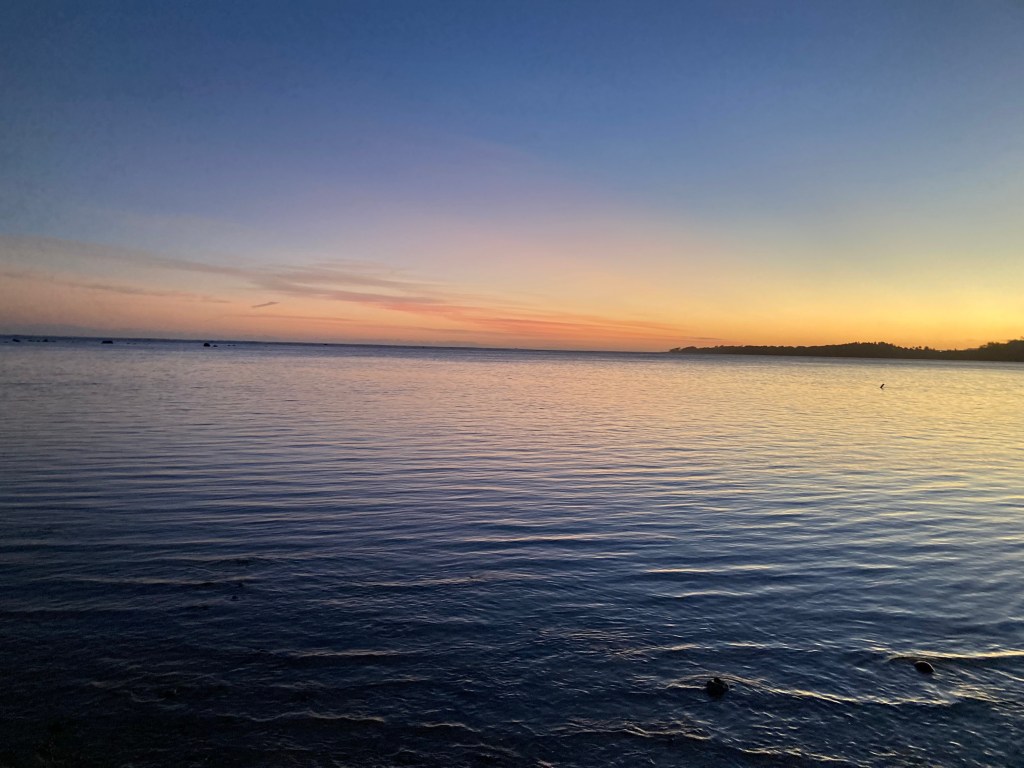
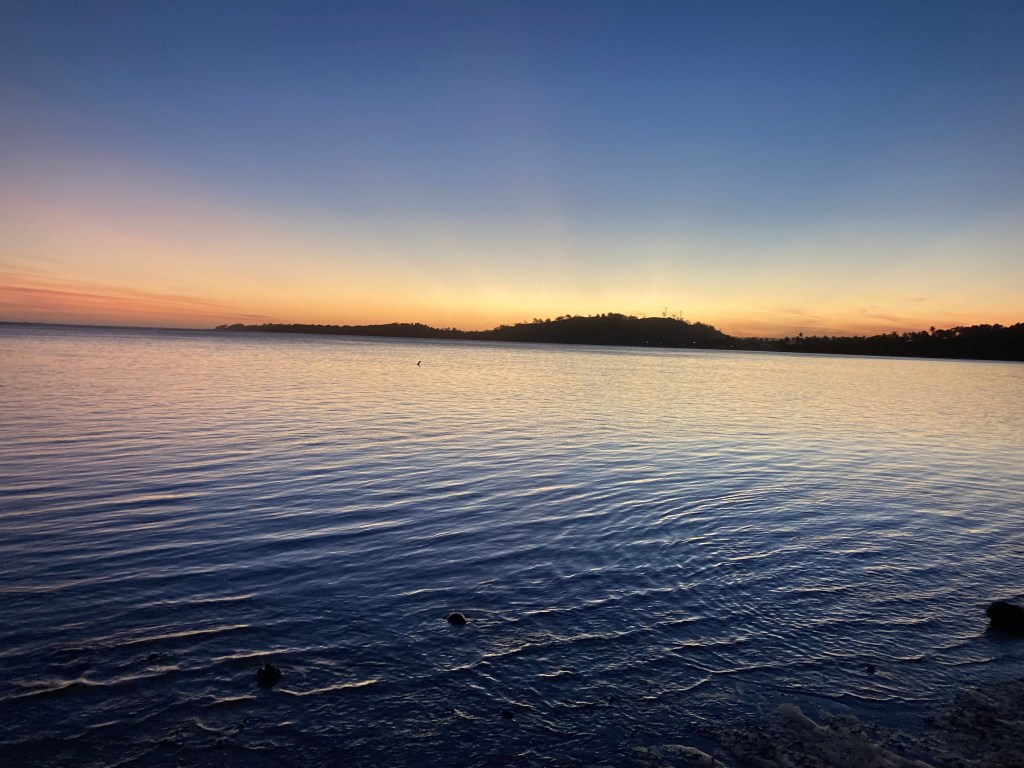
Evening fell and we crossed the road to the beach for the sunset and stargazing.
Some of us threw a volleyball around whilst others checked out sand worms. Fijians would call to us and wave as they passed. Sometimes it would be busloads of schoolkids shouting with grins from ear to ear, reaching out the windows to slap five.
Damn, I thought, a couple of months ago I was in my room in Uni, crashing out my dissertation. There are people at Sheffield Hallam right now, stressing about re-sits. Shit, look at the time difference: there’re probably people currently doing resits, or prepping for A-Level exams, or going to a job they really hate. And yet, here I am, having the time of my life, in a part of the world I’ve never visited, with newfound friends from around the globe; laughing, joking, playing games.
Those memories come with mixed emotions. Amongst them is a sprinkling of sadness, and a longing to wind back the clock, though mum tells me that’s a sign it was a damn good experience.
One thing’s for certain: I won’t be forgetting Fiji, or the people I spent that summer with.
Ever.
Throughout the week, we were briefed on what to expect, and what was expected from us during the programme. Briefings were split across the mornings, with afternoons and evenings reserved for activities. Here are some points from the briefings:
- Our programme would take place in a village near Nausori, Tailevu. I won’t share the name of the village, but locals call it N-City.
- Food and sharing are two huge parts of being Fijian. Our adoptive families would ensure we never went hungry, and neighbours would often invite people over for a second breakfast or dinner.
- Etiquette and respect are crucial pillars in society. It’s considered disrespectful to walk at a higher level than somebody else, or to reach above someone’s head to grab something. This disrespect may be compensated by stooping when walking past people who are sat on the floor, and saying ‘Tilou’ (chee-low), roughly translating to ‘Excuse me.’
Tilou is one of the most useful words we learned, considering Fijians almost always sit cross-legged on the floor, especially during mealtimes (out of fear of collapsing tables, I’m sure). People in the villages joke that Tilou comes from the English phrase ‘too low,’ as when the English colonisers arrived in Fiji, they had to stoop in people’s houses because the doorways were too low. - Touching people’s heads, and wearing hats or sunglasses on our heads around the village was also forbidden, as the head is considered sacred.
- Fijians take a more permanent standpoint on romantic relationships, and we were to under no circumstances entertain flirting or anything of that nature. What we might see as harmless fun could be interpreted very differently, resulting in emotional trauma.
I took dozens of notes in my little red notebook, wanting to be the most cultured foreigner N-City had ever seen.
Our first afternoon activity was Zumba. We were split into groups of four/five and had to find a beat on the internet, then come up with a dance routine for it.
In my group was one of the girls I went ziplining with; she was a joy to work with and turned out to be probably the most competitive human being I’ve ever known. We came up with a bit of an intense dance, rehearsed as much as we could, and then each group was to teach their dance to the other groups. After every group presented, we pressured the leaders to show us a dance of their own. Leader J must have been waiting his whole life for this moment. Bro dished out the coldest on-the-spot routine imaginable. That boy’s hips refused to lie.
Following the Zumba sesh, we went to a nearby park for a kickaround with some local kids, and then split into two teams for a game of netball rugby.
Never played it before; Never been good at rugby, no particular interest in netball, but infuse the two and oh boy! You got yourself a bit of a demon, in me, Sonny Jim.
So I had a good performance in the netball rugby game, which put me in high spirits and better-equipped me to make conversation with my peers at dinner.
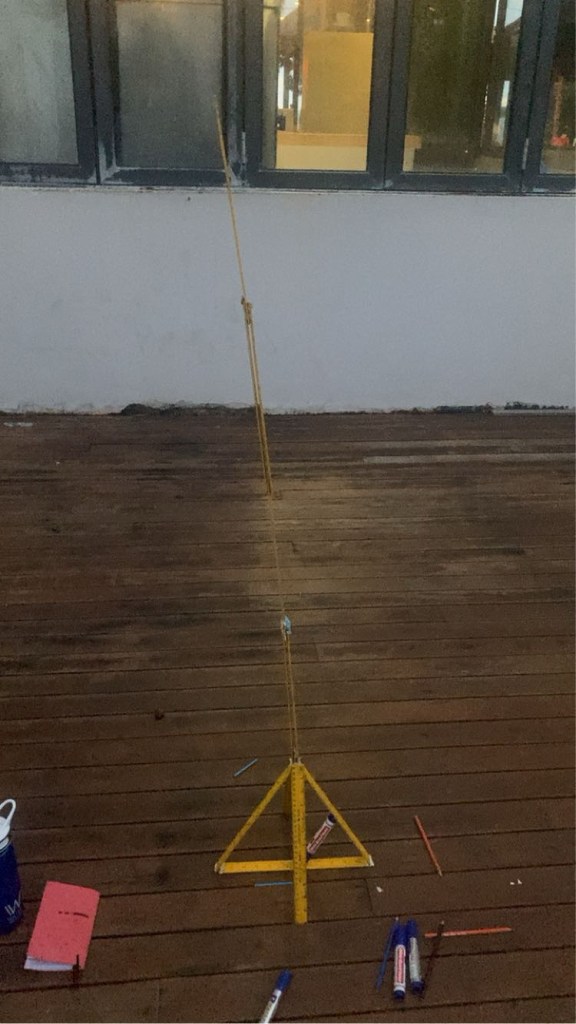
The other team-building I can recall was building a tower from the ground up, using stationery and putty. My competitive colleague was on-point again, determined to grind out the competition by building the tallest and sturdiest tower. Another team copied our model for their tower’s base, and I honestly thought she was going to spark one of them.
On the penultimate day we took a field trip to the Sigatoka Sand Dunes – one of Fiji’s national parks.
We whizzed through the streets in these cool, army-style trucks, blasting island music as the wind whipped our hair.
When I alighted the truck at the national park, my attention fell on the bushes around us, absolutely caked in cobwebs with big old spiders tangled in them.
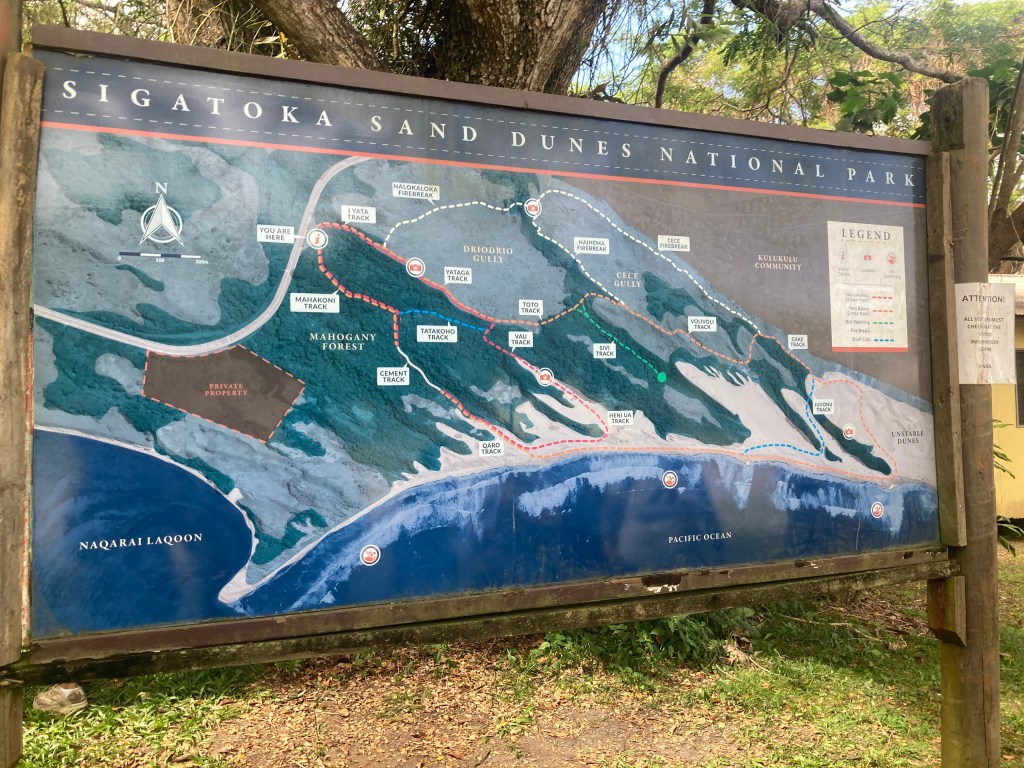
Team leader J directed us to a map of the park and briefly introduced us to Fijian superstition. It was of paramount importance that we did not enter the sections marked on the map as ‘Forbidden’. Allegedly, a group of people had done so once upon a time, and were now residing in a psychiatric ward.
On that jolly note, our guide took us on a trail weaving in and out of woodland. Clearings in the trees allowed us glimpses over the park’s thriving, seemingly endless nature. Wildlife wasn’t abundant like expected, although by this point many volunteers had been hounded by mosquitos and so were grateful for the solace. I always forgot to use bug spray because nothing ever bothered to bite me. I guess the mozzies had their favourites.
A good chunk of hiking saw us arrive at the foot of the dunes where Fiji’s Rugby Sevens trained for the Olympics before winning the nation’s first gold medal at the Rio Olympics.
Between us and the top was a short but challenging ascent. At the summit was a panoramic view of mountains and miles upon miles of beach, without a single human blemishing the backdrop (save for us). We all ran up the dunes and had fun sprinting to the edge and seeing who could flip furthest down the hill. We then trickled down to the beaches, kicking footballs and rugby balls around.
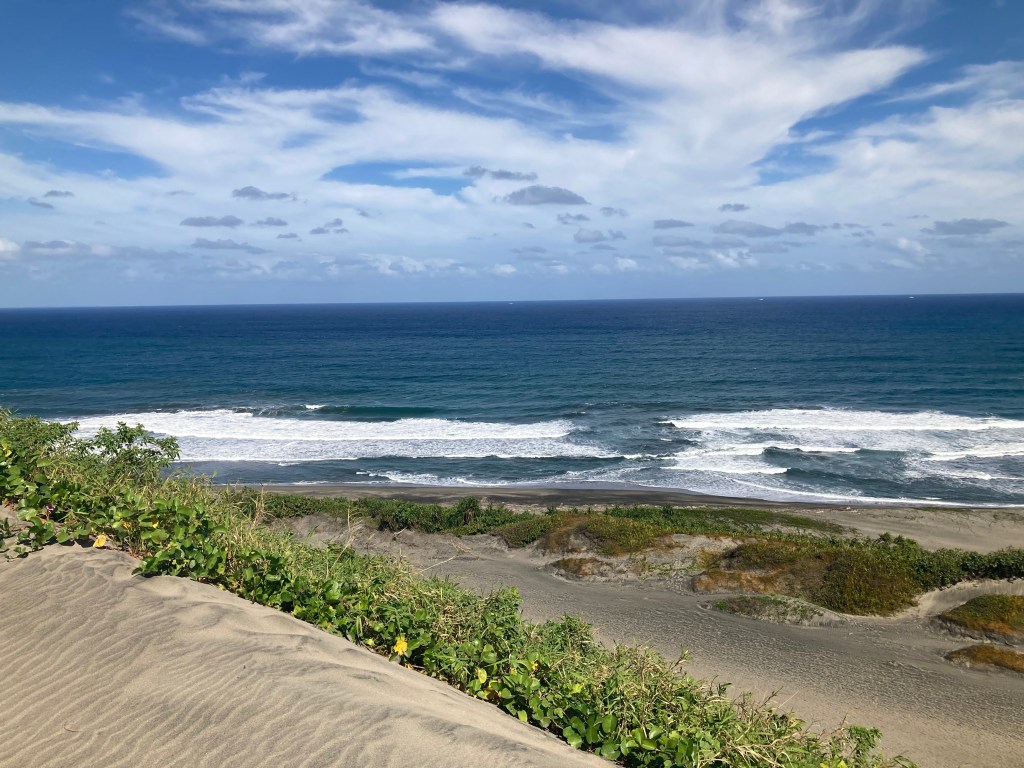
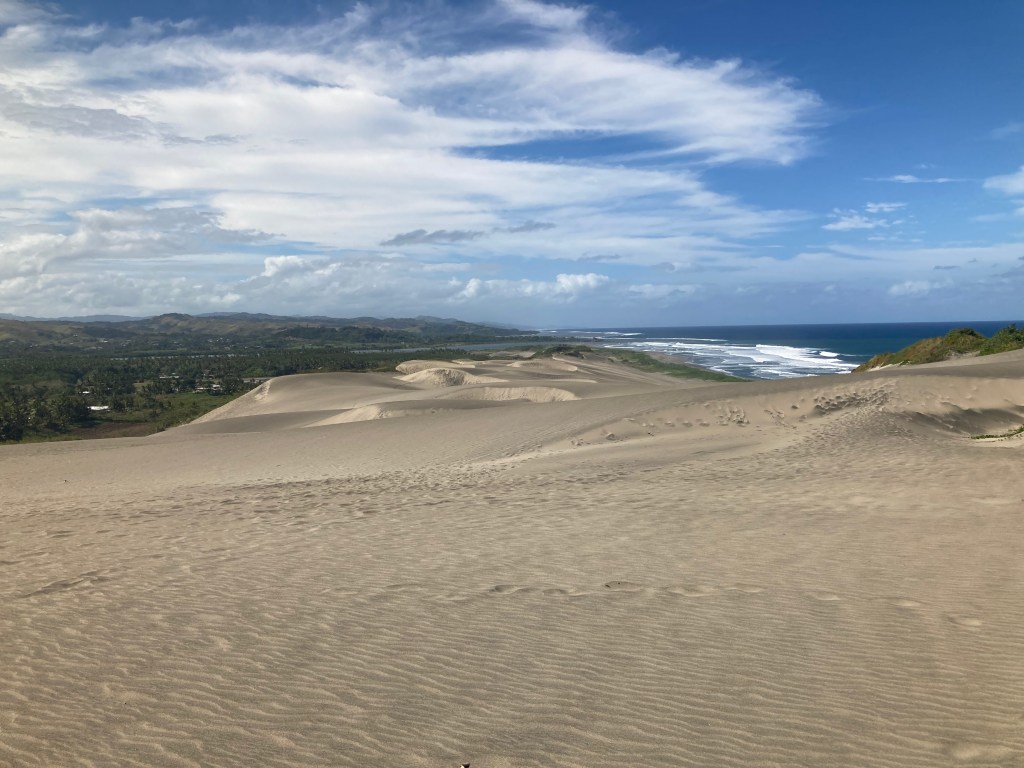
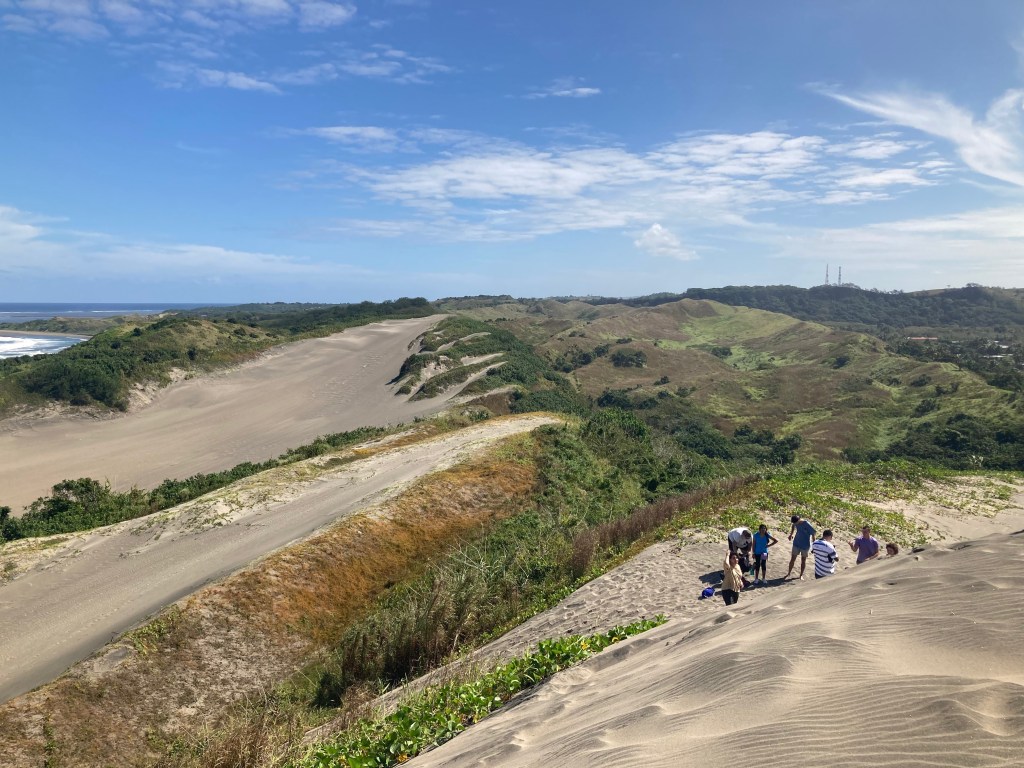
We were warned about the waves and tide – with good reason! Please don’t go deeper than your shins unless you’re an especially strong swimmer, and even then, take caution.
Marine life was also scarce, although every so often a crab would be spotted scuttling about the place, and at one point we came across a small but allegedly deadly jellyfish washed up on the shore. Sigatoka sand dunes is an activity I would recommend for anyone save for those with mobility issues, and for groups of all sizes, not excluding travellers whom want to see it on their Jack Jones. I would also advise that you don’t go swimming unless with a guide who can point you to a place that’s safe for a paddle.
One night we did a sulu try-on. A sulu is kind of a long skirt worn by both men and women in Fiji. Tradition is to wear it when visiting another village (girls tend to where them pretty much all the time, even in their own village). We were each given a pink Think Pacific sulu to wear in N-City, and practiced tying them. I needed help with mine and in the end just sort of tied it round my waist like one would a jumper.
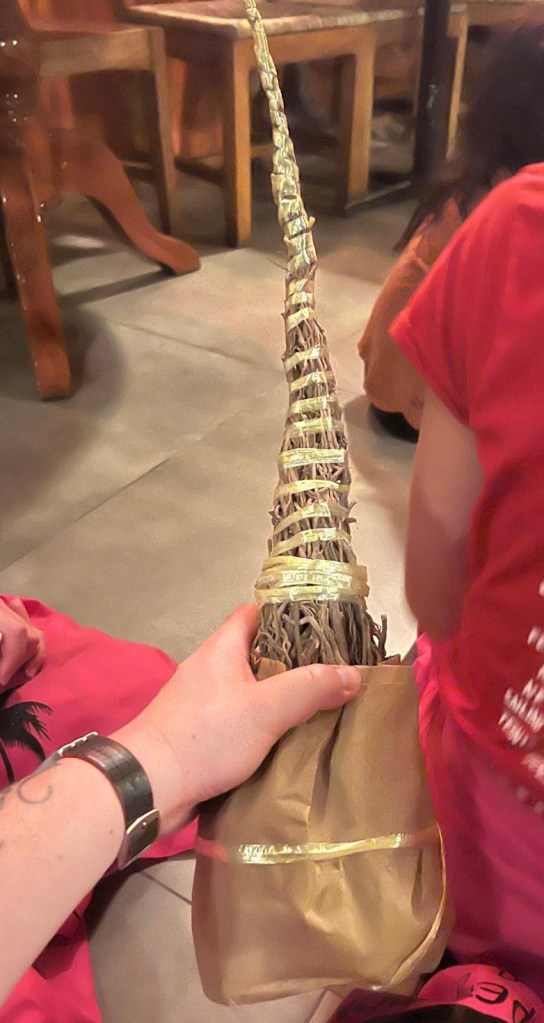
We also did a mock Sevusevu: a ceremony through which a person or persons are welcomed to a Fijian village, and typically involves the gifting of a Yaqona (yang-gon-na) plant to the chief. We treated it like the real thing, with everybody sitting together cross-legged (it’s rude to point your feet at somebody) on the floor, facing a large bowl filled with kava. Kava comes from the grinding/crushing of a Yaqona plant and mixing it with water. During a real Sevusevu, The Chief would sit behind the large mixing bowl, with the village Headman (who speaks on behalf of the Chief) next to him, whilst a smaller kava bowl (made from a coconut) is dipped into the mixing bowl and passed around.
The chief drinks first, then the bowl is washed out and refilled. Elders drink next, and then guests. As ceremonies go on and knees begin to ache, people tend to spread out and stretch their legs. As someone who isn’t accustomed to sitting cross-legged for long periods, that feeling was pure bliss.
We each tried a little kava. When the bowl comes to you, you accept it by clapping once. You then say “Bula” (hello), to which the everyone will reply “Bula!” and drink. Finish it in one swig, then pass the bowl back and seal the deal with three claps. You are now acquainted with the village. I’m not sure exactly how much the Sevusevu binds people together, whether it means you are officially part of that village, or how much of their hospitality you have access to. In our case, the Sevusevu in N-City meant that we were all one big family, natives and volunteers alike.
Many volunteers struggled with the taste. Even Fijians don’t hesitate to stick a sweet or lollipop in their mouth immediately after as a chaser, though it never bothered me. One of the Yanks made an apt comparison to “minty earth”.
Day five in Sigatoka was mostly occupied by a shopping spree. Necessary items included Bula shirts for kava parties, pocket sulus (smart, black sulus of a thicker material) for church, and luxuries that our Fijian families couldn’t necessarily afford, such as coffee, peanut butter and biscuits. I copped two rotis from the market, and then a strawberry sweet-milk (like a milkshake) and a slice of orange cake from a bakery. Of course, hoover mode was activated when other volunteers couldn’t finish their cakes.
Village water, as we were informed in the briefing, would likely be a shock to our stomachs. Vomiting and defecating oneself due to the food or water we would consume was not at all uncommon. That’s why the number one item on our kit lists was a decent filter bottle, and constipation/diarrhoea medication were pretty high up too. On the back of this we were advised to buy a 9-pack of toilet paper each.
That last night in Sigatoka was purely free time. A few volunteers had a movie night, but I wasn’t in the mood for Texas Chainsaw Massacre. I loitered by the pool, listening to travel stories, discussing what would unfold in the next twenty-four hours. I don’t always remember the jokes that were told, but I remember clearly the sounds of laughter. More than anything, I remember the feeling. Being part of something. Knowing that my life had aligned and this was where I was meant to be. University done. Degree obtained. No overhanging worries. All that remained was to embark on the adventure of a lifetime.
Looking forward to sharing part two of this journey with you all.
Thanks for reading, and I hope you’re taking good care of yourself.
Sincerely,
Tom Hooke

